Lidl Headquarters
Marketing Graphic Design Specialist
Role
Graphic Design Specialist • Visual Designer
Core Responsibilities
Creative strategy • Design thinking • Visual communication • User-centered design • Cross-functional collaboration • Print production • Digital design
Key Deliverables
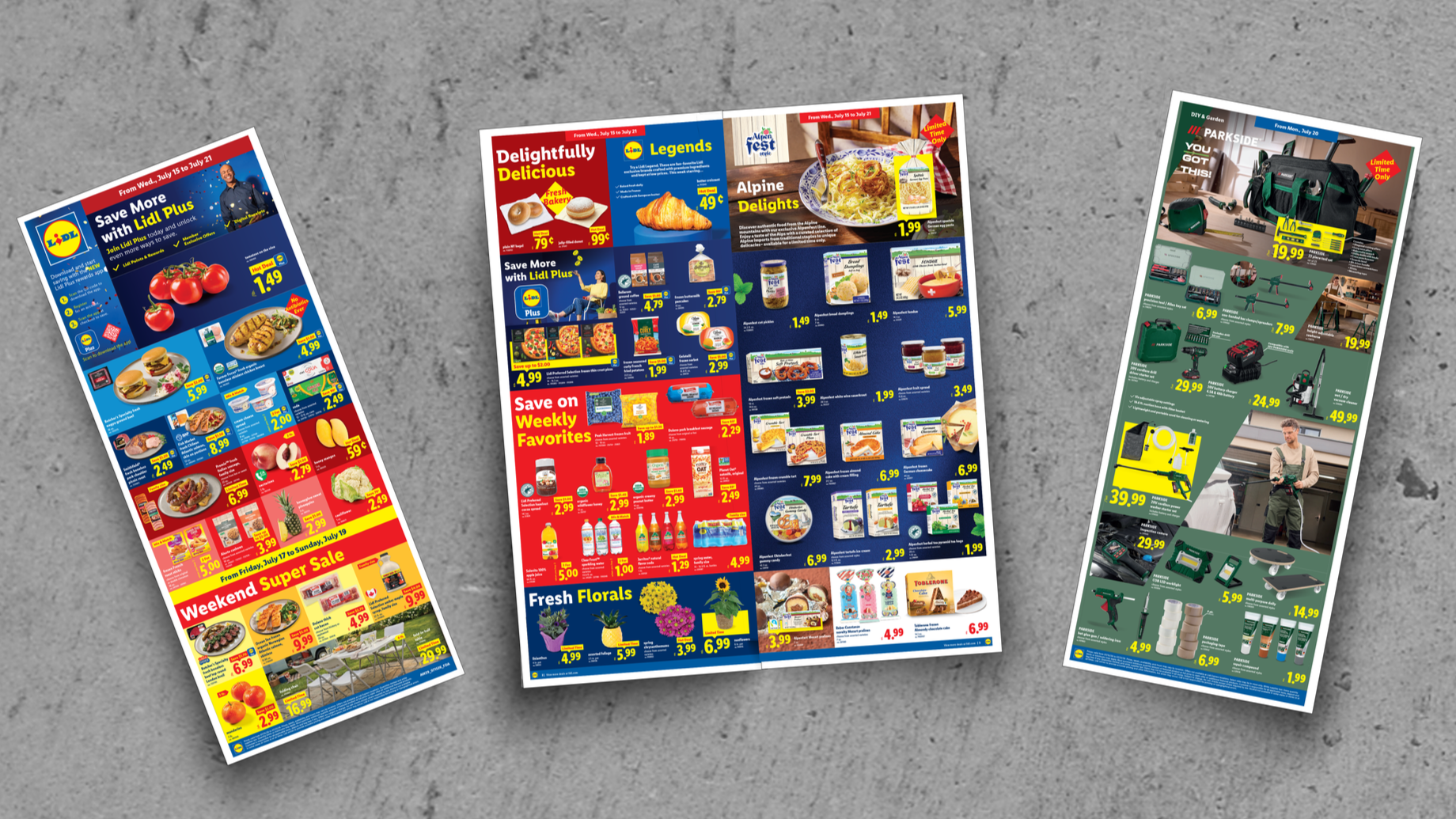
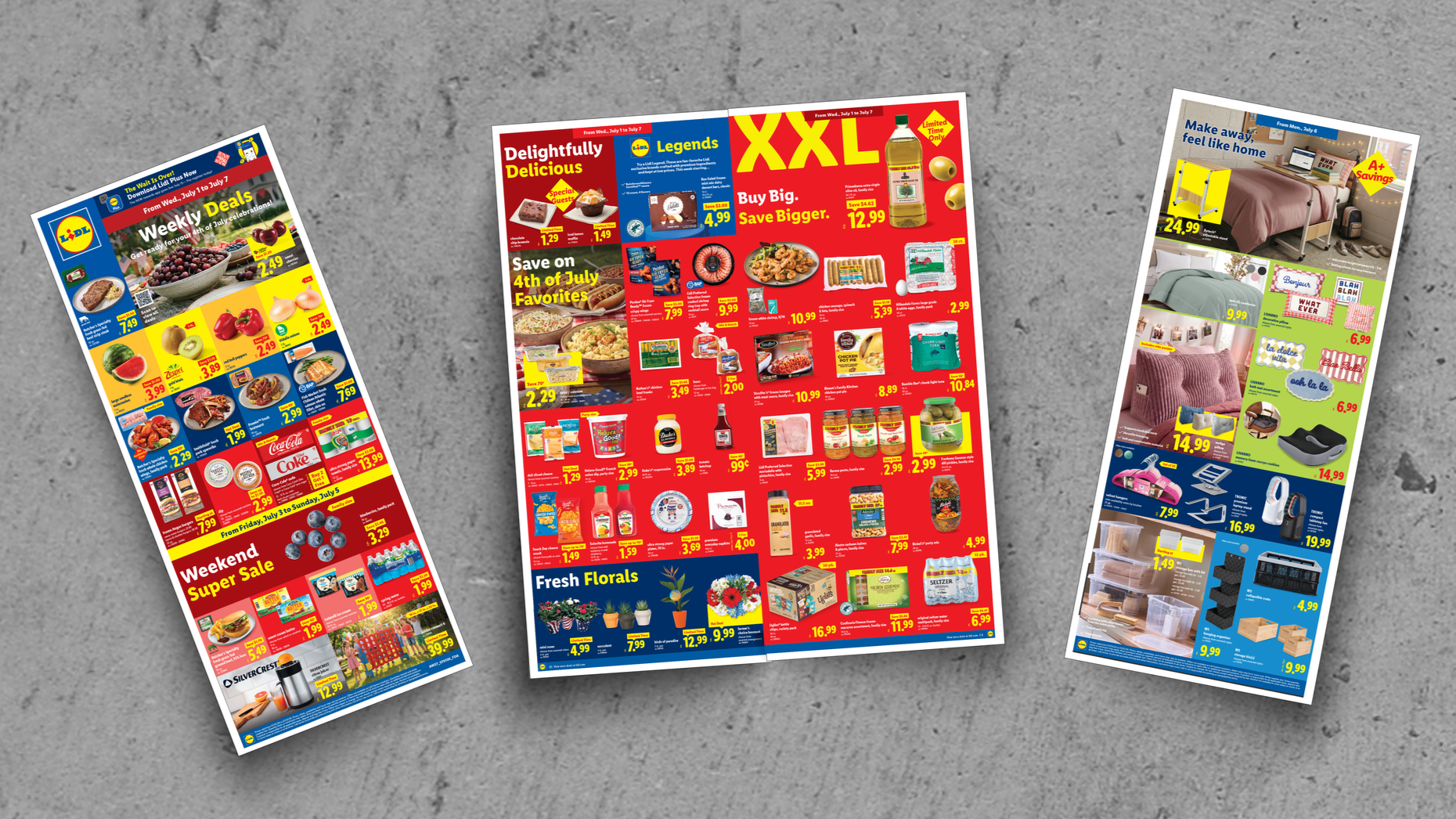
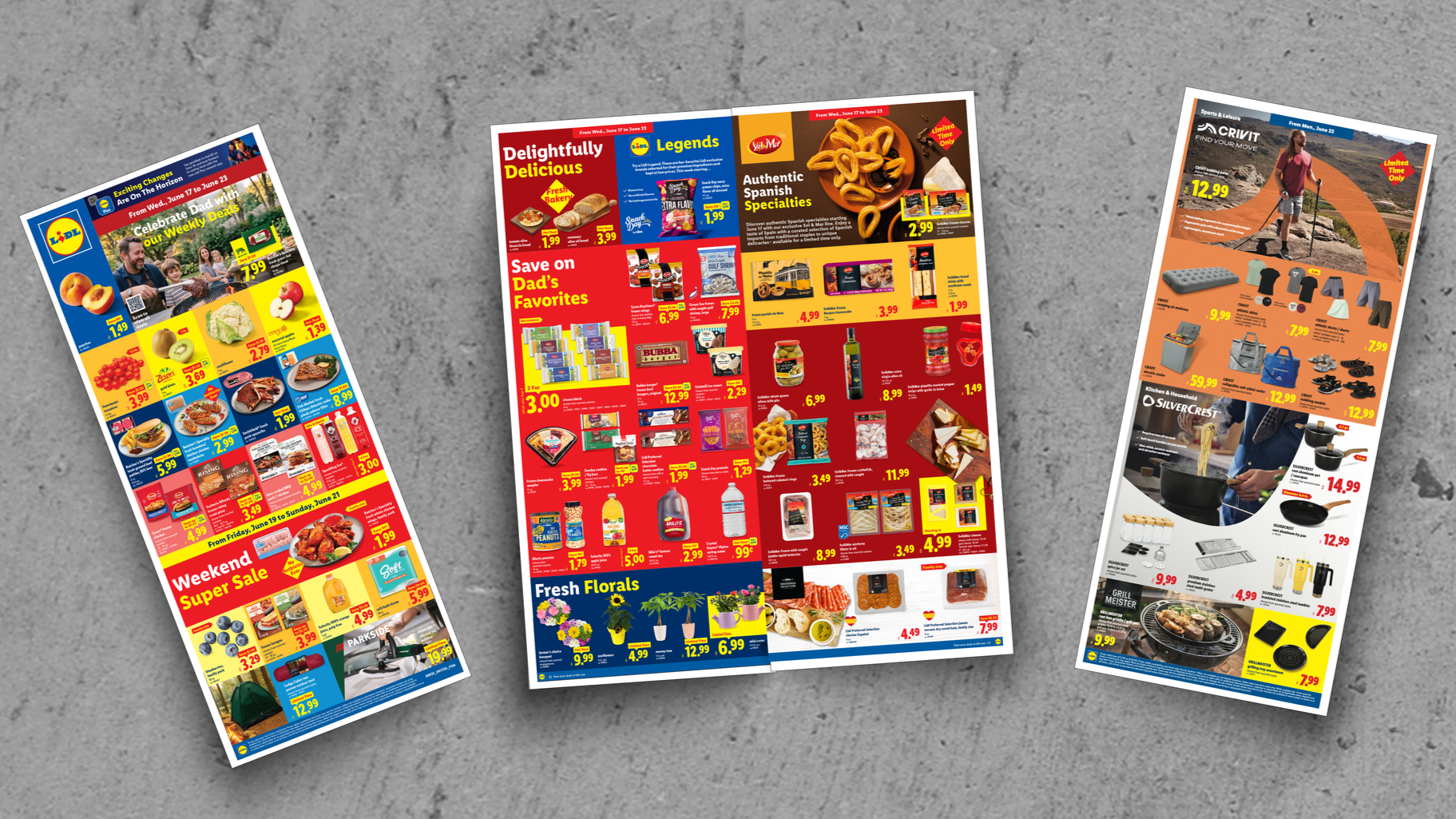
Leaflets • Advertisements • Point-of-sale (POS) materials • Campaign collateral • MyLidl app assets • Print-ready production files • Mockups
The Challenge
Retail advertising has a unique communication challenge: customers often encounter promotional content for only a few seconds. Whether viewing a leaflet, POS display, or MyLidl app asset, customers need to quickly understand:
What's on sale? How much does it cost? What's the offer?
At Lidl's scale, I designed 100+ weekly and seasonal marketing assets, balancing customer readability with business requirements, brand standards, and tight production timelines.
Designing for Quick Comprehension
I treated visual hierarchy as a functional UX decision. Product imagery, pricing, promotional messaging, and supporting information were organized so customers could quickly identify the most important information.
Rather than giving every element equal emphasis, I established a clear hierarchy:
Product → Price/Offer → Supporting information
Why?
If every element competes for attention, customers have to work harder to understand the promotion. A clear hierarchy creates a visual path that supports fast scanning rather than requiring customers to read every detail.
Balancing Information With Readability
Weekly retail advertising requires communicating a large number of products within limited space. I used grids, spacing, typography, and consistent structures to organize dense promotional content while keeping individual offers visually distinct. The goal wasn't simply to reduce information—it was to structure the information so customers could navigate it efficiently.
Connecting Print & Digital
I also created promotional assets for the MyLidl mobile app that aligned with weekly advertising campaigns. Rather than making print and digital designs identical, I maintained a consistent visual language while adapting the layouts to each medium.
Print: optimized for physical scanning and information density.
Digital: optimized for mobile viewing and interaction.
This consistency helped create a more connected experience when customers encountered the same promotion across different touchpoints.
Designing Within Real-World Constraints
My work required balancing customer needs with marketing, merchandising, brand, and production requirements. I collaborated with marketing stakeholders, merchandising teams, senior designers, and print vendors to translate business requirements into clear, production-ready creative. With 100+ assets, scalable visual systems were essential for maintaining consistency while meeting fast-paced retail deadlines.
Outcome
My Lidl experience strengthened my ability to combine graphic design with user-centered thinking—using visual hierarchy, information organization, consistency, and accessibility to make complex promotional information easier to understand.
It taught me to approach every layout with a simple question:
What does the customer need to notice first, and how can I make that immediately clear?